Efficacy Benefits of ETHYOL®

Sparing of the parotid glands translates into1

  • Objective and subjective improvement of xerostomia in patients with head and neck cancers receiving radiation therapy (RT)

ETHYOL can provide timely radioprotection1-3

  • Administration of ETHYOL before each fraction of RT can significantly reduce the incidence of moderate to severe xerostomia
  • ETHYOL administration during head and neck RT reduces the incidence of moderate to severe xerostomia 2 years after treatment

ETHYOL is indicated to reduce the incidence of moderate to severe xerostomia in patients undergoing postoperative radiation treatment for head and neck cancer, where the radiation port includes a substantial portion of the parotid glands (see Clinical Studies, in full Prescribing Information).

For the approved indication, the clinical data do not suggest that the effectiveness of radiation therapy is altered by ETHYOL. There are at present only limited data on the effects of ETHYOL on the efficacy of radiotherapy in other settings. ETHYOL should not be administered to patients receiving definitive radiotherapy, except in the context of a clinical study (see WARNINGS in full Prescribing Information). Clinical data involved ETHYOL used with standard fractionated radiotherapy.  

ETHYOL Helps Protect for Today1,2
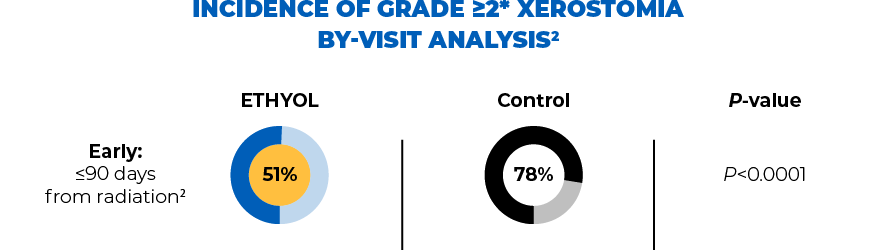
Incidence of Grade 2 or higher xerostomia versus time
*Results were from an open-label, randomized, controlled, multicenter trial using standard fractionated RT in patients with head and neck cancer, as assessed by RTOG Acute and Late Morbidity Scoring Criteria.1,2

ETHYOL Helps Preserve for Tomorrow3
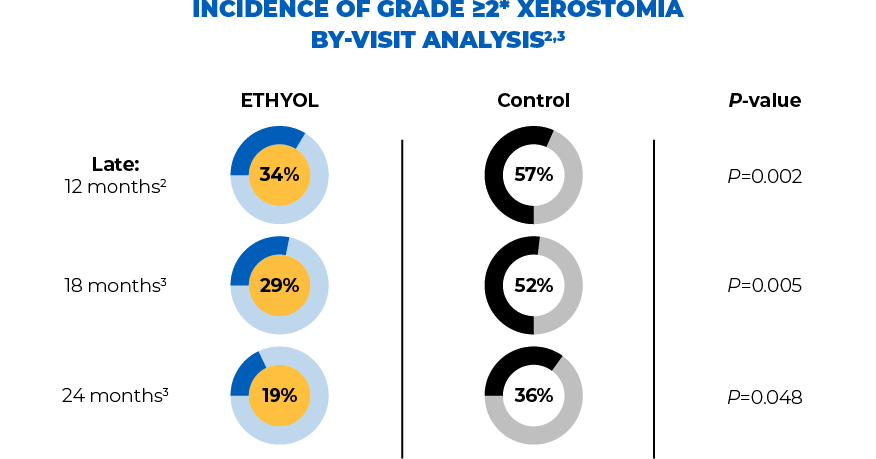
Incidence of Grade 2 or higher xerostomia versus time
*Results were from an open-label, randomized, controlled, multicenter trial using standard fractionated RT in patients with head and neck cancer, as assessed by RTOG Acute and Late Morbidity Scoring Criteria.3

Clinical data do not suggest that the effectiveness of RT in head and neck cancer is altered by ETHYOL1-3

  • ETHYOL did not compromise locoregional tumor control, disease-free survival, or overall survival 24 months after RT3#
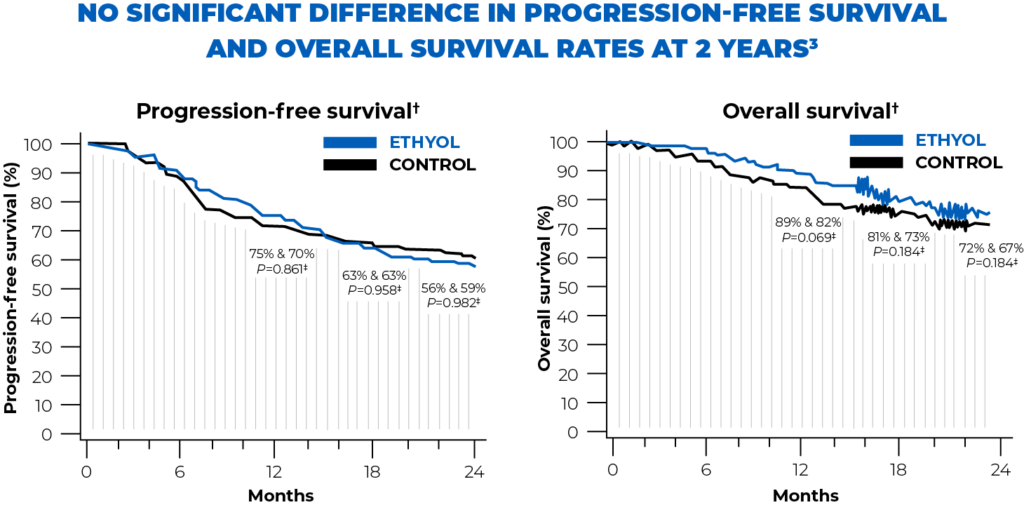
Overall survival (%) versus time
# Results were from an open-label, randomized, controlled, multicenter trial using standard fractionated RT in patients with head and neck cancer.3
 Survival rates were based on Kaplan-Meier estimates.
 Based on Wilcoxon test

Please see important safety information and full Prescribing Information

References:

  1. ETHYOL (amifostine for injection) [Package Insert]. Scottsdale, AZ: Legacy Pharma USA, Inc., 2026.
  2. Brizel DM, Wasserman TH, Henke M, et al. Phase III randomized trial of amifostine as a radioprotector in head and neck cancer. J Clin Oncol. 2000;18:3339-3345.
  3. Wasserman TH, Brizel DM, Henke M, et al. Influence of intravenous amifostine on xerostomia, tumor control, and survival after radiotherapy for head-and-neck cancer: 2-year follow-up of a prospective, randomized, phase III trial. Int J Radiat Oncol Biol Phys. 2005;63:985-990.

INDICATIONS AND USAGE

Reduction of Cumulative Renal Toxicity with Chemotherapy
ETHYOL® (amifostine) is indicated to reduce the cumulative renal toxicity associated with repeated administration of cisplatin in patients with advanced ovarian cancer (see Clinical Studies in full Prescribing Information).

Reduction of Moderate to Severe Xerostomia from Radiation of the Head and Neck
ETHYOL is indicated to reduce the incidence of moderate to severe xerostomia in patients undergoing post-operative radiation treatment for head and neck cancer, where the radiation port includes a substantial portion of the parotid glands (see Clinical Studies in full Prescribing Information).

Limitation of Use
Do not use ETHYOL in other settings where chemotherapy can produce a significant survival benefit or cure (see WARNINGS and PRECAUTIONS in full Prescribing Information) or in patients receiving definitive radiotherapy (see WARNINGS and PRECAUTIONS in full Prescribing Information), except in the context of a clinical study.

IMPORTANT SAFETY INFORMATION ABOUT ETHYOL

ETHYOL is contraindicated in patients with known hypersensitivity to aminothiol compounds.

Patients should not receive ETHYOL if they are hypotensive or dehydrated or taking antihypertensive therapy that cannot be stopped for 24 hours preceding ETHYOL administration at doses recommended for chemotherapy. Patients should be adequately hydrated prior to receiving ETHYOL and blood pressure should be monitored during treatment.

Allergic manifestations including anaphylaxis and severe cutaneous reactions have been associated rarely with ETHYOL administration. Severe cutaneous reactions have been reported more frequently when ETHYOL is used as a radioprotectant and some reactions have been fatal, or have required hospitalization and/or discontinuance of therapy. Patients should be carefully monitored prior to, during, and after ETHYOL administration. Severe cutaneous reactions may develop weeks after initiation of ETHYOL administration. ETHYOL should be permanently discontinued for serious or severe cutaneous reactions alone or for any cutaneous reaction associated with fever or other constitutional symptoms not known to be due to another etiology.

Nausea and/or vomiting occur frequently after ETHYOL is given and may be severe. In a radiotherapy clinical trial, the most common side effects with ETHYOL were nausea/vomiting (53%) and hypotension (15%). Cutaneous eruptions have also been commonly reported during clinical trials and were generally nonserious. Other effects which have been described during, or following ETHYOL infusion include flushing, chills, malaise, fever, rash, dizziness, somnolence, hiccups, and sneezing. These events have not generally precluded completion of therapy.

It is recommended that antiemetic medication be administered prior to and in conjunction with ETHYOL. Oral 5HT3 receptor antagonists, alone or in combination with other antiemetics, have been used effectively in the radiotherapy setting. When ETHYOL is administered with highly emetogenic chemotherapy, the fluid balance of the patient should be carefully monitored. Serum calcium levels should be monitored in patients at risk for hypocalcemia.

Please click here for full Prescribing Information for ETHYOL.

You are encouraged to report negative side effects of prescription drugs to the FDA. Visit www.fda.gov/medwatch or call 1-800-FDA-1088.